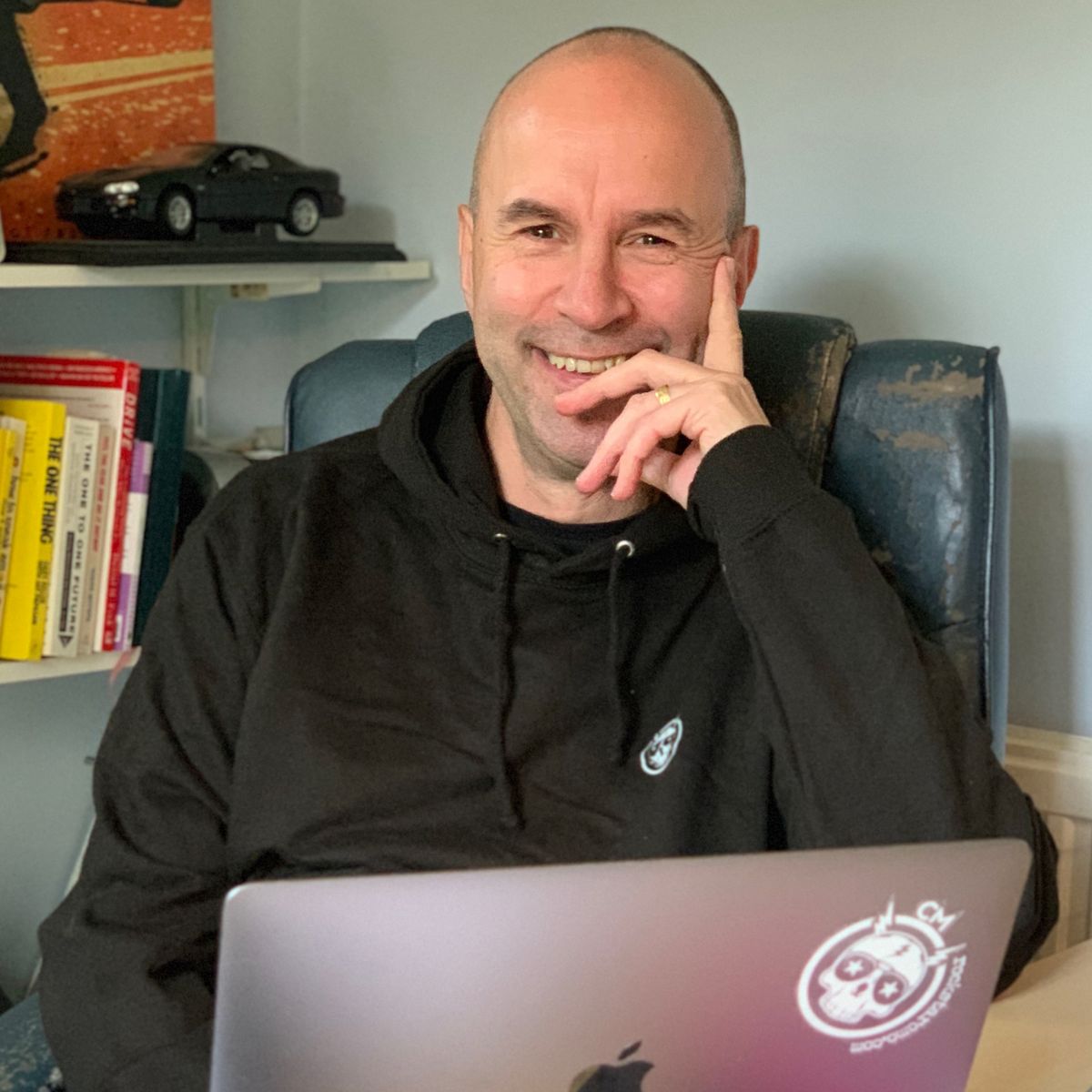

Welcome to The Beat by Rockstar CMO. I’m Ian Truscott, not a rock star, but a CMO and trusted advisor, and in this newsletter, I’d like to share a mix of marketing street knowledge that I hope will help unlock the rockstar marketer in you.
Hello rock star!
Last week I celebrated six years of the Rockstar CMO podcast!
Six years isn't strictly true, since it's actually 6 years since the earliest episode you can find today, as I quietly euthanized the first 5 episodes because they were SO bad.
It’s been mostly a weekly podcast, producing it every Saturday with mid-week specials and a flirt with doing it twice a week, which means I have 372 episodes. It has probably been well over a thousand hours to record and produce. And in this newsletter, I thought I’d share a bit of the process.
Although, It would be easy to think that if you wanted to create a podcast, you would have done so already, (right?) but I thought I’d share some tips in keeping with the editorial policy of the podcast, it’s 5 f’in’ things of course.
#1 - You need to be prepared for the long haul.
There are plenty of stats about how many podcasts die before they reach 10 episodes. This is because it is a thankless task at first, especially if you have an audio-only podcast; there is no instant dopa-hit of likes and shares that can serve as encouragement. And let’s be honest, maybe you’ll take some time to get your groove.
Consistent publication is key, aside from encouraging your audience to make you a habit, the platforms will punish you if you stop. For example Apple will stop automatically downloading episodes for your followers if you stop publishing for 15 consecutive days. So, ideally you really need to get into a weekly cadence.
#2 - Know why you are doing it.
I’ll be honest, I am constantly revisiting this. I started it out of curiosity for the medium and because it was during COVID and a great way to network.
I’ve played with the format, had guests, regulars, and I’ve even got work from it. But what I have settled on is that I do it to have the conversations with my chums and share knowledge. Of course, I love that those conversations resonate with a core group of regular listeners, but I am not doing it for the downloads.
#3 - Guests, regulars, or going solo?
This decision is going to depend on #2, why you are doing it.
When I had new guests every week, it had it’s high and lows, you meet some great people and there’s a lack of predictability, which is both positive and negative.
Sometimes the conversation is good, sometimes the audio is great, sometimes the logistics of organizing the call go smoothly, and sometimes all of these three things are LOUSY.
Wrangling this is a much bigger task, but on the upside, having guests introduces your podcast to a new audience, so it’s great for downloads.
I find solo episodes really hard. Seth Godin is the master at this, and it’s a shame his podcast has stopped, but there is a lot more prep and editing. But if your objective is to demonstrate your expertise, this is the way to go, as you can explore a topic in depth, and, unlike when you are the host of an interview show, you are there to make your guests look good, not you.
Having sais that - if you are in this to share your expertise and be the shop window for what you do or what you write, you should consider a strategy of appearing on other people’s podcasts, not creating your own. Obviously, that will take some effort, some PR skills, and cold outreach, but it may better serve your “why” and require less effort than starting a podcast.
The goldilocks combination for me is regular guests, with the occasional new guest sprinkled in.
They are predictable in terms of logistics, conversation quality, and audio, but they also bring something fresh to each show, and, as I shared earlier, chatting with these folks regularly is my motivation.
#4 - Find a community or a buddy
Podcasting can be a lonely business, and as I mentioned in #1, there is none of the instant dopamine gratification of obvious engagement you get with other forms of social content. Yes, you will see download numbers, plays, and maybe likes, but there is very little feedback.
If you don’t want to be part of the statistic that don’t make it past episode 10, being part of a podcasting community or having a buddy (like I do with my regular guests) that provide support will keep you going through the days or weeks when it seems like a good idea to skip a week. And, as I mentioned before, skip two weeks and the podcast platforms hate that.
Plus, Rockstar CMO is part of the Marketing Podcast Network, which has a iInkedIn group, Slack channel and regular calls, so I also have a community.
#5 - Video
I should add something here about video, since most good podcasting advice recommends a video podcast. My chum Robert Rose, whom I refer to a lot in this newsletter, has said he wishes he and Joe Pulizzi had made the switch sooner with This Old Marketing.
This advice is primarily about discoverability; there is no algorithm showing your content to a future audience on audio podcast platforms, unlike, of course, all the social channels.
So, it depends on why you are doing the podcast. If you need an audience and reach, then if you are starting today, video is mandatory.
However, in my view, it’s hard to achieve the same audio production quality in video, as it’s harder to edit, and it’s human nature to refer to things people can see on the screen, reducing the quality of the experience for the listener.
It’s also a different creative. For example, on our podcast, I have a segment that takes place in a bar, I can set the soundscape for that, create the illusion that my guest and I are sitting in a bar, something which would be impossible for me to do on video.
And, if you are creating a video show, is it still a podcast?
I’ve wanged on long enough, thanks for reading this far - those are my 5 f’in’ tips. I know some of you are podcasters, I’d be really interested if any of this resonated.
One thing I have missed is tech or tool recommendations, aside from saying it is WAY easier today, that tools like Adobe Podcast work miracles with audio, and that I think standard microphone technology is way better than when I started.
And the beat goes on…
I have no plans to stop, so the beat will go on, hence my dive into late 70’s disco funk with the subject line for this - And The Beat Goes On - The Whispers.
Have a splendid week!
Cheers!
Ian

Ian Truscott
Host & Chief Bottle Washer - Rockstar CMO podcast
Managing Partner - Velocity B
Personal website: iantruscott.com
This Week’s Street Knowledge


Get your Monday Marketing Mojo Working
Late 70’s disco funk, that’s got to get a marketing mojo working…